Enterprise AI
AI Coding Agents
Agent readiness can cut repeated token work
September 24, 2026 - 2 minute read
Enterprise AI
AI Coding Agents
September 24, 2026 - 2 minute read
An agent that rediscovers the build command on every task spends tokens on work the team already understands. When the command fails because an environment variable was never documented, the next investigation adds more context without moving the patch forward. Agent readiness gives that waste a concrete place to start.
Factory’s readiness report identifies missing engineering foundations and recommends fixes. Its value for token efficiency comes from removing repeated work. The score itself does not establish a percentage reduction in spend.
Take a recent task that required several corrections before validation passed. Separate the tokens needed to understand the requested change from the work spent discovering setup requirements, repeating broad searches, or repairing an unrelated environment.
Factory’s AGENTS.md support gives Droid durable project instructions. Record the tested build and validation commands, important repository boundaries, and exceptions that a new contributor would otherwise have to discover. Keep those instructions specific enough to use and short enough to maintain.
An instruction only helps if it is true. Run the documented command in the intended environment. If a test fixture is unavailable, explain how it is supplied instead of leaving the agent to infer that a failure is caused by its patch.
The dashboard below is reused from Factory’s Agent Readiness launch. It illustrates the repository-level view that turns recurring setup problems into an improvement queue.
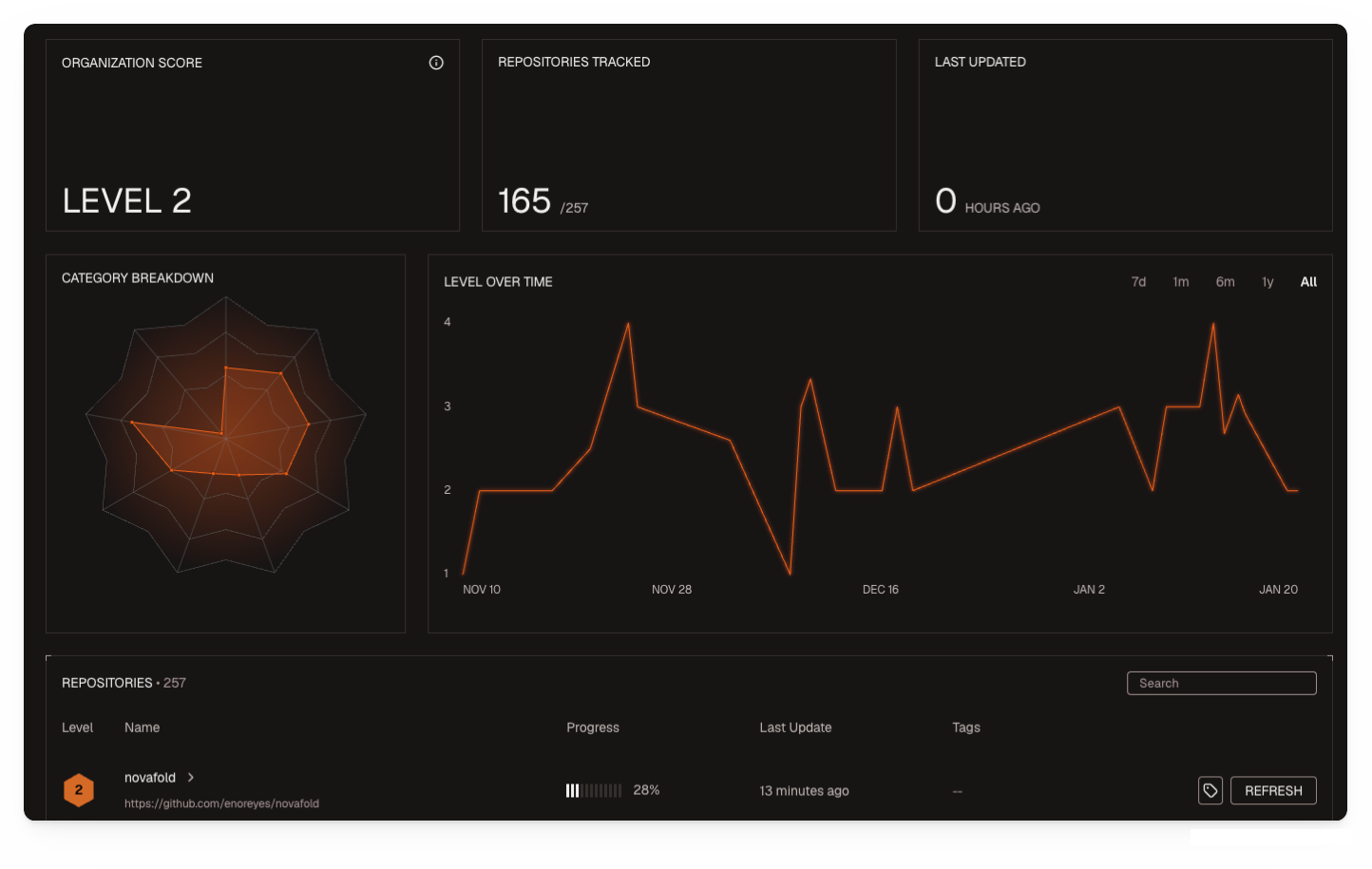
Source: Agent Readiness launch. The screenshot is a published example, not live data from your organization.
Measure a representative task before and after the repository fix. Keep the model, acceptance criteria, and environment comparable. Record the failed commands, repeated reads, elapsed time, and reviewer corrections alongside model usage.
Factory’s cost and productivity documentation describes the measurement surfaces available for connecting spend to work. Use those observations to test whether a readiness change removed avoidable effort. Do not attribute an improvement to documentation if the model or task also changed.
The cost of reconstructing context is real engineering work. Nav’s case study reports a 60% reduction in context-switching time after adopting Factory. That customer result concerns human workflow and approved context access. It is not a measured token-saving result, so it should not be converted into one.
Start with the recurring problem that affects the most tasks. A reliable targeted check or accurate environment guide can be reused by every later session. Inspect the next few tasks to see whether the same failure disappeared, rather than declaring success when a configuration file was added.
Discuss with Factory how to measure readiness improvements against your existing engineering workflow.
Start building